
17 Garden Wedding Ceremony Ideas
Each idea includes description, steps to pull it off, approximate cost ranges, the advantages & trade-offs, plus bonus tips. Costs are based on moderate venues & vendors—actual prices will vary by region.
1. Floral Arch Altar
Description:
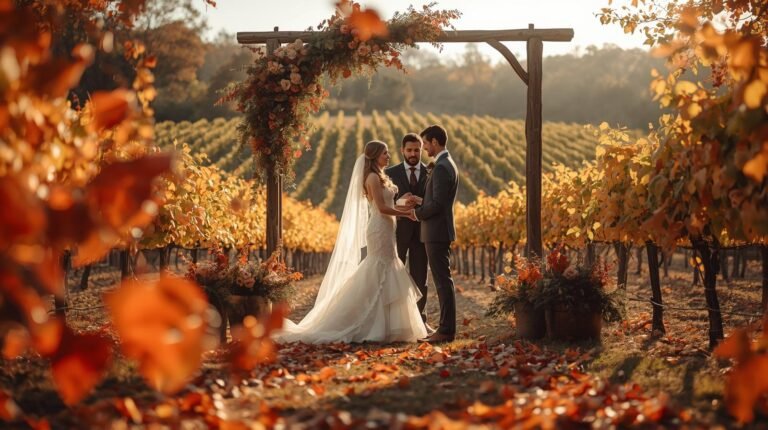
A large arch (or arbor) decorated with flowers, greenery, fabric drapery, or mixed materials where the couple stands to exchange vows. The arch frames you, creating a focal point.
Steps to pull off:
- Pick a style (classic, boho, rustic, minimalist).
- Choose the arch structure (wood, metal, hoop, or branches).
- Select flowers/greenery: in-season, locally grown = cheaper.
- Add drapery or fabric if desired (sheer, chiffon, or gauze).
- Hire someone (florist) or DIY with friends.
- Secure it in the ground or on base plates (wind can be a problem outdoors).
Costs:
- DIY low-end (basic structure + minimal flowers): $200-$600.
- Florist installed, full blooms (roses, peonies, mixed foliage): $1,200-$3,000+.
Pros:
- Gorgeous visual focal point, photogenic.
- Sets tone for ceremony decor.
- Flexible—styles can be adapted: wood + wildflowers for rustic, sleek metal + orchids for modern.
Cons:
- Floral cost can balloon.
- Weather and wind can damage/destroy subtle floral elements.
- Transport and installation logistics are more complex.
Tips:
- Pick flowers that hold up in sun/heat if relevant.
- Use repurposed arch from ceremony as photo backdrop or reception decor.
2. Wildflower Aisle Installation
Description:
Instead of plain aisle chairs or benches, line the aisle with wildflower arrangements, moss, petals, greenery, or small floral clusters to create a more lush path.
Steps:
- Measure aisle length.
- Source wildflowers / seasonal blooms.
- Decide if items are in vases, baskets, or just tied to chairs.
- Lay down a runner or use petals directly.
- Water flowers or choose hardy varieties if heat is strong.
Costs:
- Low: $150-$500 if DIY, using local wildflowers.
- Higher: $800-$2,000+ with premium florals and detailed installations.
Pros:
- Gorgeous natural aesthetic.
- Inexpensive if using what grows locally.
- Guests love the romantic walk.
Cons:
- Maintenance issues: flowers may wilt in sun.
- Clean-up can be heavy if petals everywhere.
- Potential allergic reactions among guests.
Tips:
- Use foliage as filler—cheaper and durable.
- Pre-assemble bouquets/bundles the day before to reduce stress.
3. Fairy Light / Lantern Canopy
Description:
String lights or lanterns overhead (tree branches, pergola, tent frame) creating a twinkling canopy; or line lanterns along the aisle or base of trees.
Steps:
- Determine where the supports are (trees, poles).
- Source durable lights (outdoor rated) or lanterns.
- Plan wiring or powering (battery packs, solar, generator).
- Hang lights/fix them securely; test in daylight & dusk.
Costs:
- Hundreds: $300-$800 for basic lighting & lanterns.
- Thousands: $1,500-$4,000+ for elaborate design, rentals, electrician.
Pros:
- Magical ambiance especially at dusk / evening ceremonies.
- Cost-effective enhancement of the natural setting.
- Doubles for ceremony + cocktail hour.
Cons:
- Needs electricity or reliable battery/solar power.
- Weather (rain, wind) can ruin lights.
- Initial setup is often labor & time heavy.
Tips:
- Use warm toned lights for romantic glow.
- Check local regulations / venue rules about electrical wiring.
4. Tree Ring Ceremony Circle
Description:
Instead of a straight aisle, arrange chairs in a circle (or semi-circle) around a tree or pair of trees where the ceremony happens at center (“tree ring”).
Steps:
- Pick which tree(s) will be center.
- Map out seating in circular pattern ensuring guests can see.
- Leave paths for access & photography.
- Decorate tree with drapes, floral wrappings, or hang lanterns.
Costs:
- Low: $0-$500 (if tree already present, minimal decor).
- Higher: $1,000-$2,500+ depending on decor & rentals.
Pros:
- Intimate feel, guests feel closer.
- Nature becomes part of the design.
- Unique layout less common.
Cons:
- Some guests may have obstructed view if not planned well.
- Tree roots / ground uneven—access issues.
- Photography angles need more thought.
Tips:
- Use risers or platforms if ground slopes.
- Mark chair placement ahead of time to ensure balance.
5. Moss / Greenery Backdrop
Description:
Use moss walls or panels plus greenery for a backdrop behind the ceremony altar, or behind where you’ll stand. Clean, modern, with a touch of nature.
Steps:
- Rent or build a frame/backdrop.
- Source preserved moss or live greenery.
- Add florals only as accents.
- Install behind the altar spot—ensure visibility.
Costs:
- DIY simpler version: $500-$1,200.
- Professional/backdrop rental + install: $2,000-$4,000+.
Pros:
- Greenery is often less expensive than full bloom flowers.
- Very photo-friendly, modern aesthetic.
- Indoor/outdoor flexibility.
Cons:
- Moss panels can be heavy / big: transport issues.
- If live greenery, maintenance—watering, insect issues.
- Style might feel cold if overused without warmth.
Tips:
- Mix in wood or warm elements to soften the look.
- Use preserved moss if you want year-round or setup ahead.
6. Garden Bench and Vintage Seating
Description:
Using garden benches, vintage chairs, or mixed seating rather than uniform chairs. Possibly with cushions, throws, or mismatched antique pieces for charm.
Steps:
- Collect or rent assorted seating.
- Ensure enough seating for elderly guests/comfortable.
- Place cushions and décor to match wedding colors.
- Map out seating arrangement in advance.
Costs:
- Renting vintage chairs/benches: $5-$20 each depending on style and condition.
- If DIY or borrowing: minimal cost for cushions/decor.
Pros:
- Cozy, relaxed vibe.
- Adds personality and charm.
- Can save money if borrowing.
Cons:
- Uniformity suffers—some guests expect matching setups.
- Comfort/ ergonomic issues—some antique chairs aren’t comfy.
- Logistics: collecting, cleaning, transporting vintage seating.
Tips:
- Combine vintage and modern for balance.
- Do a trial run to ensure seats are safe and stable.
7. Arbor Drapery + Fabric Swags
Description:
Using fabric drapery hung on an arbor or canopy, or swags draped across trees or poles, to soften the space and add elegance.
Steps:
- Select fabric (lightweight, flowy: chiffon, tulle, gauze).
- Pick color scheme.
- Install drapery only where support structures exist.
- Secure fabric so it won’t blow or tear in wind.
Costs:
- Fabric cost + DIY install: $100-$500.
- Professionally installed drapery: $800-$2,500+.
Pros:
- Creates beautiful movement in photos.
- Softens hard structures, adds romance.
- Can reduce visual harshness of background.
Cons:
- Weather: wind can ruin look, sun may fade colors.
- Fabric procurement & cleaning.
- Needs secure installation for safety.
Tips:
- Use fabric tie-backs or weights.
- Test drapery in daylight & wind conditions.
8. Lawn Ceremonies with Casual Seating
Description:
Ceremonies held directly on lawn or grass, often with simple seating (benches, chairs, hay bales), picnic blankets, or even low seating like cushions for very informal vibe.
Steps:
- Choose flat lawn area.
- Mark zones for ceremony, seating, walkway.
- Secure seating and provide shade or cooling if needed.
- Provide covers or umbrellas in case of weather.
Costs:
- Very low if seating is minimal/rented cheaply. Could be $0-$800.
- Higher if seating must be borrowed or rented plus decor.
Pros:
- Very true garden vibe.
- Relaxed, informal, approachable.
- Cost-savings on flooring, stage etc.
Cons:
- Comfort issues: lawn can be uneven, muddy, insects.
- Weather dependency.
- Some guests may prefer more formal seating.
Tips:
- Provide ground protection (wooden platforms) for guests to walk.
- Have backup plan if weather turns.
9. Fruit Trees or Orchard Wedding
Description:
A ceremony amidst fruit trees—apples, citrus, cherry, whatever grows locally. Using orchard rows as natural aisles.
Steps:
- Pick orchard with good layout.
- Arrange chairs between tree rows or use tree as altar backdrop.
- Use fruit elements as decor (fruit garlands, hanging fruit, table decor).
Costs:
- Venue fee for orchard can vary widely: $500-$5,000+.
- Minimal decor cost if trees are already scenic.
Pros:
- Strong natural character.
- Unique, memorable setting.
- Often lush with greenery and blossoms as backdrop.
Cons:
- Seasonal: blossoms only certain times.
- Ground may be uneven.
- Permissions needed if private orchard.
Tips:
- Visit orchard ahead of time in same season to inspect.
- Think about insect control / allergies.
10. Garden Water Feature or Fountain Altar
Description:
Using a pond, fountain, or pond-edge as part of the ceremony visual, either altar near water or with water feature in background.
Steps:
- Choose venue with water feature that’s safe.
- Speech/microphone arrangements considering sound echoes.
- Decorate edges with greenery, flowers, floating candles.
Costs:
- Hiring venue with water: venue fees $1,000-$5,000+.
- Decor add-ons: $200-$1,000.
Pros:
- Highly romantic – water + natural sound adds ambiance.
- Stunning photos.
- Natural backdrop, reduces decor needed.
Cons:
- Safety: slippery edges, risk for kids.
- Sound may interfere with speech unless amplified.
- Mosquitoes or water-related insects.
Tips:
- Place walkways or platforms safely.
- Add insect-repellent stations.
11. Botanical Lounge Ceremony
Description:
Set up lounge furniture, garden sofas, benches, and cozy decor where guests can sit in informal clusters rather than rows. A mingling ceremony feel.
Steps:
- Rent or borrow lounge Furnishings.
- Layout clusters around ceremony space but keep line of sight.
- Add rugs, pillows, side tables.
- Decorate to integrate with ceremony altar / backdrop.
Costs:
- Renting vintage lounge furniture: $500-$2,500+.
- DIY or borrowed: less, cost of transport + decor.
Pros:
- Comfortable, relaxed feel.
- Encourages guest interaction.
- Stylish, modern aesthetic.
Cons:
- Could reduce formality, some guests might expect traditional setup.
- Sight lines: making sure everyone sees.
- Weather can ruin fabrics and cushions.
Tips:
- Use weather-friendly fabrics.
- Place furniture on stable surfaces.
12. Circular Aisle
Description:
Instead of a straight walkway, guests surround a circular or u-shaped aisle with the couple in center or focal point.
Steps:
- Measure the circle/curve needed.
- Arrange chairs accordingly.
- Ensure photographer/videographer can capture from all sides.
- Decorate aisle edges: petals, lanterns, small floral markers.
Costs:
- Extra chair rentals + layout time: $300-$1,200 extra.
- Decor marginal cost difference if aisle decorations needed all around.
Pros:
- Immersive, dramatic feel.
- Guests feel closer, part of the moment.
- Unique visual for photos.
Cons:
- Not many venues accommodate this layout.
- More chairs needed for full circle.
- Lighting & staging requires more planning.
Tips:
- Test layout on site ahead of time.
- Use markers to position chairs.
13. Welcome Arch with Greenery Path
Description:
Guests enter through a welcome arch and walk a decorated path (greenery, petals, lanterns) to the ceremony site.
Steps:
- Build or rent an arch.
- Plan a path from entrance to altar.
- Decorate path edges.
- Add signage.
Costs:
- Arch rental or build: $400-$1,500.
- Floral / petal pathway: $200-$800.
Pros:
- Sets the mood from the moment guests arrive.
- Dramatic entry for ceremony.
Cons:
- Extra space/time needed for entrance pathway.
- Clean-up of petals/path materials.
Tips:
- Use petals that are biodegradable.
- Lighting for evening entries.
14. Shade Canopy or Sail Cloth Over Ceremony Space
Description:
Providing shade via canopy, sail cloth, or pergola to protect guests & couple, while adding style.
Steps:
- Choose canopy structure.
- Ensure enough shade during likely sun hours.
- Match cloth/canopy color to theme.
- Fixings must be secure.
Costs:
- Rent canopy / sail cloth: $300-$1,500.
- Premium fabrics and drapery: more.
Pros:
- Comfort for guests (shade, reduce glare).
- Helps with photos (no harsh sunlight).
- Stylish as well as functional.
Cons:
- Wind risk.
- Installation cost & labor.
Tips:
- Position event timing to avoid midday harsh sun.
- Use light fabrics so they billow softly if breeze exists.
15. Personalized Vow Box / Time Capsule Ceremony
Description:
Include a ritual where couple stores “vows” or letters in a box or capsule and maybe opens later, or invite guests to drop notes in a box.
Steps:
- Choose box or capsule.
- Create small cards for writing.
- Decide when to open.
- Place box at altar or separate table.
Costs:
- Minimal: $50-$200 depending on box quality and design.
Pros:
- Adds personal meaning.
- Memorable moment that guests remember.
- Low cost.
Cons:
- Needs planning (supplies, ceremony flow).
- Some guests may skip participating.
Tips:
- Include instructions in program.
- Keep time capsule ideas small and weather-safe if outdoors.
16. Eco-Friendly / Sustainable Ceremony
Description:
Use environmentally friendly decor: potted plants instead of cut flowers, recycled/compostable decor items, zero plastic, reusable items.
Steps:
- Source potted plants & flowers that can be replanted.
- Use recycled papers for invites or digital.
- Avoid plastic.
- Choose reusable or compostable dinnerware and decor.
Costs:
- Sustainable options can be comparable to typical, sometimes less if using community plants or rentals. Expect $500-$3,000+ depending on scale.
Pros:
- Good for environment.
- Growing trend—guests respect and remember.
- Can reduce waste/cleanup.
Cons:
- Sometimes eco versions cost more upfront.
- Logistics of reuse/rental are more complex.
Tips:
- Check with vendors about sustainable pieces.
- Plan ahead to source sustainable components early.
17. Ceremony Under a Canopy of Trees
Description:
Use existing tree canopy in a garden to host the ceremony—couple stands under trees, guests sit around or beneath shade.
Steps:
- Scout the garden for ideal trees with thick branches.
- Ensure ground is level.
- Arrange seating to face under canopy.
- Enhance with hanging decorations: chandeliers, lanterns, ribbons.
Costs:
- Venue cost if garden is private or public permitted. Usually venue fee $500-$5,000+. Decor add ons $200-$1,000.
Pros:
- Beautiful natural shade and backdrop.
- Minimal decor needed since nature does the work.
- Very romantic and organic feel.
Cons:
- Tree health & safety concerns.
- Lighting may be dim; need supplemental lights for photos.
- Weather still a factor (wind, rain).
Tips:
- Do a dry run at similar time of day to check light under trees.
- Use uplighting in trees for evening ceremonies.
General Tips for All Garden Wedding Ceremonies
- Scout the venue ahead of time, at the same time of day you’ll be having the ceremony. Light, shade, wind, ground condition—all matter.
- Have a backup plan for weather: tent, indoor option, umbrellas.
- Sound system: outdoor spaces eat sound. Microphones for officiant, maybe wireless mics for couple.
- Permits & licensing: public gardens often need permits, sound permissions.
- Restroom access & facilities: guests need comfort.
- Lighting for evening ceremonies: lights along aisle, lanterns, candles.
Frequently Asked Questions (FAQs)
Q1: How far in advance should I book a garden venue?
You should aim to book a garden venue at least 12-18 months ahead, especially if it’s popular or in peak season. Gardens with beautiful scenery get booked fast.
Q2: What’s the average cost of garden wedding ceremony décor?
Decor can range widely. Basic decor (arch, seating, minimal florals) can cost $1,000-$3,000. Full floral arches, extensive lighting, furniture/rental combinations can push décor alone to $5,000-$15,000+ depending on scale and location.
Q3: How many guests can a garden ceremony hold?
Depends on the garden size. Small backyard gardens may fit 30-80 comfortably with seating. Larger public gardens or orchards might accommodate 100-200+ depending on layout. Always measure space and account for the aisle, altar, and guest comfort.
Q4: What are the challenges of garden weddings?
Main challenges: weather unpredictability, insects/bugs, uneven ground, lack of amenities (shade, restrooms, power), and logistical issues (transporting decor).
Q5: Can I reuse ceremony décor for reception?
Yes—100%. Many couples move arches, floral pieces, lanterns, etc., from ceremony site to reception to minimize waste and reduce costs.